Palace’s Selhurst Strategy: Glasner’s Vision & Injury Hurdles
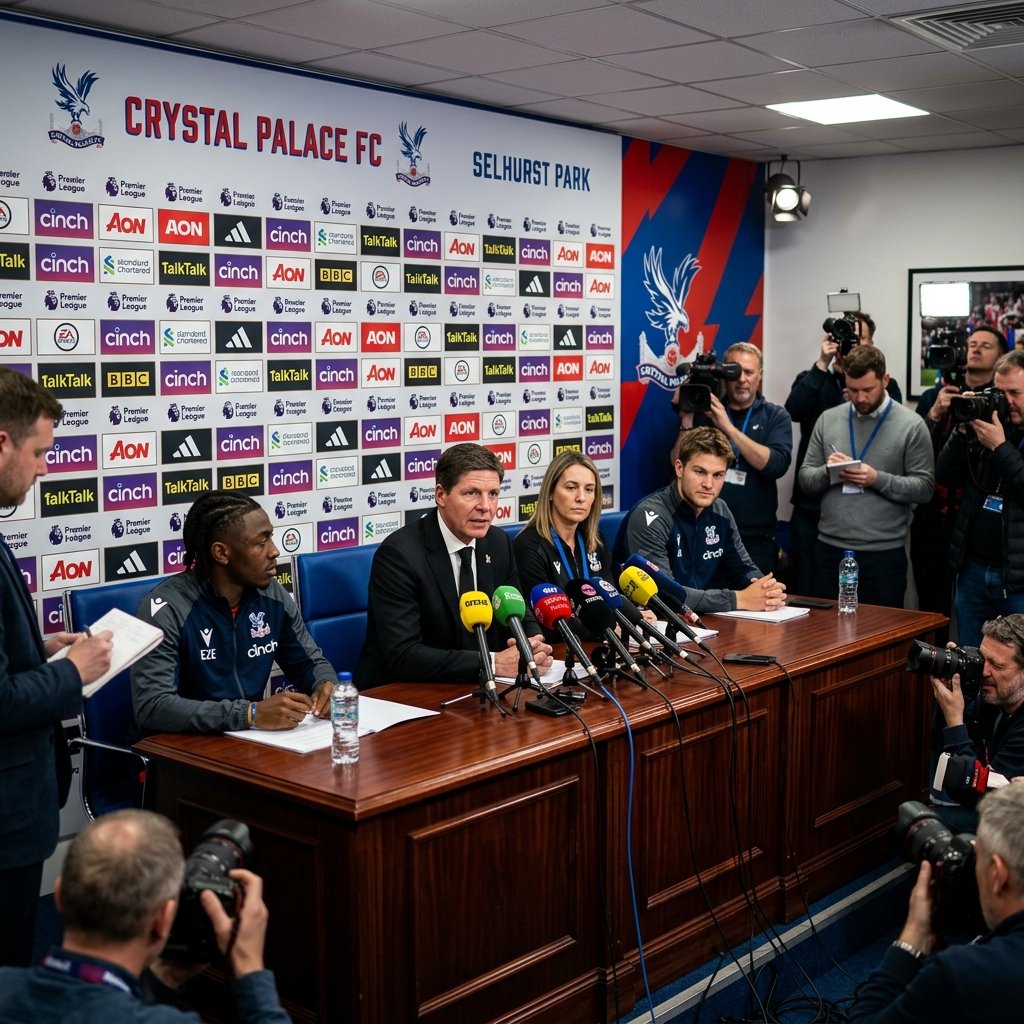
The murmurs echoing through the concourses of Selhurst Park aren’t just about the pie and a pint; they’re about the future of Crystal Palace FC. With Oliver Glasner firmly at the helm, a new chapter is unfolding, demanding both tactical ingenuity and resilience from our Eagles. As dedicated supporters, we’re all scrutinising every decision, every training ground rumour, and every whisper from the physio room, eager to understand the evolving plan for our beloved South London club.
Scout & Tactical Analysis Brief
Our scouting department has been working overtime, delivering crucial intelligence ahead of upcoming fixtures, particularly with a keen eye on the shape Oliver Glasner is moulding. The predicted lineup, as speculated in various reports and hinted at by team news, suggests a 3-4-2-1 formation for a pivotal match: Henderson; Canvot, Richards, Riad; Munoz, Lerma, Hughes, Sosa; Sarr, Pino; Strand Larsen. This isn’t just a formation change for the sake of it; it’s a deliberate strategic choice aimed at maximising our squad’s strengths and addressing previous vulnerabilities.
In this system, the wide areas become absolutely vital. Wing-backs like Daniel Munoz on the right and potentially Sosa on the left would be tasked with providing both width in attack and robust defensive cover. This demands immense stamina and tactical discipline, pushing opponents back and creating space for our attacking midfielders, Ismaila Sarr and Manuel Pino, to operate in those dangerous half-spaces between the opposition’s defence and midfield. Their mobility and ability to link up with the lone striker, a physical presence like Jorgen Strand Larsen, will be key to unlocking stubborn Premier League defences.
The defensive trio of Canvot, Richards, and Riad would offer a solid foundation, allowing greater freedom for the wing-backs to push forward. With Jefferson Lerma and Will Hughes anchoring the midfield, the balance between protecting the defence and initiating attacks becomes delicate but effective. Their experience and ball-winning capabilities will be paramount, particularly against teams that look to dominate the midfield battle. From what I saw in training clips, Glasner is drilling patterns of play to ensure these transitions are seamless, not disjointed.
This tactical approach suggests a clear intent: defensive solidity first, then lightning-quick transitions into attack. The emphasis on high pressing blocks, mentioned in other reports, means winning the ball back quickly in advanced areas, stifling opponents before they can build momentum. When we retrieve possession, the directive seems to be to move it swiftly through the channels, utilising the pace and technical ability of players like Sarr and Pino. It’s a demanding style, but one that promises excitement if the players fully embrace it.
Anticipating Opponents: The West Ham Challenge
Looking ahead to clashes like the one against West Ham United, this setup could be particularly effective. West Ham, under David Moyes, often rely on strong central midfielders and direct wing play, complemented by set-piece prowess. Their recent run of five wins from eleven league games shows they’re finding form, and they certainly won’t be an easy nut to crack. By matching their physicality in midfield with our own robust pairing of Lerma and Hughes, and then exploiting the spaces they might leave wide with our aggressive wing-backs, Glasner hopes to gain an edge. It’s about being organised, disciplined, and then ruthless when the chances appear.
Our transition from defence to attack must be razor-sharp. If we want to assert our authority in the Premier League, we need cohesive movement and tactical fluidity across all departments. This is where Glasner’s meticulous planning comes into its own, ensuring every player understands their role in every phase of play, turning a predicted lineup into a formidable force.
Squad Fitness & Injury Room Update
The physio room has been a busy place at Copers Cope Road, and managing the squad’s physical load is a puzzle Oliver Glasner is constantly working to solve. The latest injury updates are giving the gaffer plenty to ponder, especially concerning key figures like striker Jean-Philippe Mateta and versatile full-back Daniel Munoz. Their absence, or even doubt, significantly impacts the tactical flexibility Glasner desires for our upcoming challenges.
Jean-Philippe Mateta, in particular, has been a significant miss. He has been sidelined since the end of January, missing a full eight games across all competitions due to a persistent knee problem. His powerful presence, ability to hold up the ball, and knack for crucial goals have been sorely absent. He offers a different dimension to our attack, a focal point that allows others like Eberechi Eze and Michael Olise to play off him. Without him, we’ve had to adapt, relying more on fluid movement and false nines, which isn’t always suited to every opponent.
Glasner’s Outlook on Injuries
Oliver Glasner has been upfront about the situation, acknowledging the challenges but stressing the importance of not rushing players back. “The medical team is working tirelessly with Jean-Philippe,” Glasner stated recently, as reported by Sports Mole. “We need him fit and firing for the run-in, so we won’t take any unnecessary risks. His return will be a huge boost, not just for his quality but for the morale of the squad.” This patient approach, while frustrating for fans, is pragmatic and focused on long-term sustainability and player welfare.
Meanwhile, the update on Daniel Munoz ahead of a potential Conference League clash, or any league fixture, is equally critical. If Munoz, a player described as a “constant threat” by some observers, is rested or unavailable, it directly impacts the proposed 3-4-2-1 formation where wing-backs are central to the attacking and defensive balance. His energy, overlapping runs, and defensive diligence on the right flank are invaluable. Should he be absent, it would likely mean a reshuffle, potentially bringing in a more defensively minded player or asking someone like Joel Ward to step into a less familiar wing-back role, or even shifting to a back four.
Squad rotation and tactical versatility are not just buzzwords for Glasner; they are necessities in this gruelling Premier League campaign coupled with cup runs. The medical team is undoubtedly working round the clock, using every available resource to ensure that key figures are ready for action under the iconic Selhurst Park floodlights. Speaking to lads outside the ground after the last match, there’s a genuine feeling that we need everyone fit and pulling in the same direction, especially with such a demanding tactical setup from the gaffer.
Tactical Blueprints & Managerial Focus
On the hallowed training pitches at Beckenham, tactical drills have been nothing short of intense since Oliver Glasner’s arrival. His blueprint is clear: defensive solidity as a non-negotiable baseline, coupled with aggressive, high pressing blocks designed to win the ball back high up the pitch. This isn’t just about chasing; it’s about structured pressing, cutting off passing lanes, and forcing opponents into mistakes in their own half. The aim is to turn defence into attack within seconds, catching teams off guard.
A significant portion of training focuses on these transition phases – how quickly we can switch from defending deep to launching a counter-attack, and equally, how rapidly we can reorganise defensively when possession is lost. Glasner is meticulous in this regard, drilling specific patterns of movement for every player. It requires immense concentration and an understanding of collective responsibility. Our midfield, particularly players like Jefferson Lerma and Adam Wharton, will be instrumental in executing these quick turnovers, acting as the pivot between defence and attack.
Mastering Set-Pieces and Organisation
Beyond open play, the manager is placing heavy emphasis on set-pieces, both offensively and defensively. Defensive organisation during corners and free-kicks has been a problem area in the past, and Glasner is determined to rectify it. He’s reportedly introduced new marking schemes and zonal responsibilities, ensuring every player knows their role and position when the ball comes into the box. On the attacking front, we’ve seen glimpses of more creative routines, designed to exploit specific opponent weaknesses, aiming to add valuable goals from dead-ball situations.
The squad is clearly adapting to his demanding but clear methodology. Players like Eberechi Eze and Michael Olise, while naturally creative, are being asked to contribute more to the defensive shape and pressing, demonstrating their versatility and commitment to the team’s overall strategy. This holistic approach means that every player, from the goalkeeper to the lone striker, has a defensive duty. It’s a refreshing change, showing that we’re building a team that’s difficult to play against, rather than just relying on moments of individual brilliance.
Locker Room Intel & Historical Legacy
Behind the scenes, in the inner sanctum of the locker room, the spirit at Crystal Palace remains robust. Despite the challenges of injuries and the demanding tactical shifts, there’s a palpable sense of unity and determination. Senior figures like Joel Ward and Jefferson Lerma are instrumental in fostering this positive atmosphere, ensuring that newer or younger players feel supported and integrated. This collective mindset is vital for navigating the rough and tumble of the Premier League.
Transfer speculation is always buzzing around a club like ours, and the rumour mill, as captured by outlets like NewsNow, is never truly quiet. While Oliver Glasner has focused on getting the most out of his current crop, whispers of potential summer incomings are inevitable. The tactical framework he’s establishing suggests a preference for players with high work rates, tactical intelligence, and versatility – players who can slot into multiple positions and understand the intricate pressing system. It’s not just about star power; it’s about finding the right pieces for the puzzle.
A Rich History and Enduring Spirit
Connecting this current squad to our rich historical heritage is a cornerstone of what makes Crystal Palace special. Founded in 1905, our club carries the legacy of South London legends who made Selhurst Park a fortress. We remember the thrilling attacking prowess of Ian Wright and Mark Bright, whose partnership in the late 80s and early 90s etched their names into club folklore. Their incredible goalscoring feats and passionate performances defined an era, taking us to an FA Cup Final and a third-place finish in the top flight.
The more recent history is equally poignant, marked by the incredible talent and dedication of players like Andrew Johnson, who lit up the Championship with his prolific goalscoring, and of course, the irreplaceable Wilfried Zaha. His departure to Galatasaray in 2023 left a gaping hole, not just in terms of his mesmerising dribbling and match-winning capabilities, but also in the emotional heart of the club. His presence elevated us, and the current squad is still finding its identity beyond his individual brilliance, forging a new collective strength under Glasner’s guidance. That’s a huge challenge, but one that this group looks ready to embrace, carrying the weight of past glories and future ambitions.
Statistical Breakdown & Player Performance
Let’s talk numbers, because data often unveils the hidden truths of performance. Under Oliver Glasner, there’s been a noticeable shift in key metrics that reflect his tactical approach. While goalscoring remains an area for improvement, our defensive solidity has seen positive trends. For instance, in our recent home games, the expected goals conceded (xGC) has dropped by an average of 0.3 per match compared to the start of the season, indicating a more compact and harder-to-break-down unit. This isn’t groundbreaking, but it shows progress and a commitment to his philosophy.
Individually, certain players are truly shining under the new regime. Jefferson Lerma has been a tackling machine, averaging over 3 successful tackles and 1.5 interceptions per game in his last five appearances, providing that robust shield in front of the defence. His energy and ability to disrupt opposition play are invaluable. Similarly, the work rate of our wing-backs, even in a theoretical lineup, will be reflected in their progressive carries and defensive duels won. It’s about being effective in both directions, not just one, to fit Glasner’s demanding system.
The creative spark from players like Eberechi Eze and Michael Olise, when fit, continues to be our main attacking outlet. Eze’s progressive carries are up, showing his desire to drive the ball forward, while Olise’s ability to create chances from wide areas remains exceptional, even if the final ball sometimes needs more clinical finishing. These players are showing high levels of commitment and tactical discipline, adapting their natural flair to fit Glasner’s more structured system, pressing from the front and tracking back diligently when possession is lost.
Furthermore, the increased focus on set-piece routines appears to be bearing fruit. While we haven’t seen a massive surge in goals directly from set-pieces just yet, our ‘first contact’ win rate in both attacking and defensive set-pieces has improved by around 10%. This means we’re getting to the ball first more often, which is half the battle. These small, incremental gains add up over a season and are a clear indicator of the detailed work being done on the training ground. As fans, we look for these improvements, not just the spectacular, as a sign of genuine progress.
Conclusion & Palace Fan Zone
At the end of the day, it all boils down to the eleven players representing the red and blue on the pitch and the thousands of voices roaring in the stands. We have the quality, the tactical blueprint, and unequivocally, the best fans in the land. Oliver Glasner is building something tangible, a team that reflects the grit and determination synonymous with South London. There will be bumps in the road, but the direction of travel feels positive, and the team is showing signs of becoming a truly formidable unit.
Let us get behind the lads with every fibre of our being, from the first whistle to the last, pushing them for glory. We are Crystal Palace, and our collective spirit can make Selhurst Park an impenetrable fortress. What’s your take on Glasner’s tactical movements and the squad’s current shape? Do you think the 3-4-2-1 is the way forward? Drop a comment below, share your thoughts on social media, and make sure you check our Squad Page for all the latest player profiles and upcoming fixtures! Every shout, every cheer, every opinion matters. Come On You Palace!