Eagle’s Edge: Glasner’s Tactics & Injury Impact Ahead of Key Fixtures
The turn of the year at Selhurst Park always brings a fresh wave of anticipation and, often, a good dose of anxiety for us Crystal Palace supporters. With the Premier League season heating up, every tactical tweak, every injury update, and every rumour sends ripples through our passionate fanbase. This comprehensive breakdown aims to cut through the noise, offering an in-depth look at where our beloved Eagles truly stand.
Glasner’s Vision: Tactical Blueprint & Early Returns
The arrival of Oliver Glasner has ushered in a new era, marking a definitive shift in our tactical approach. Gone are some of the more conservative setups we’ve seen; in their place, we’re witnessing a bold push towards a more assertive, front-foot style of football. It’s a challenge for any new gaffer to stamp his authority on a squad mid-season, but the early signs suggest the players are buying into his philosophy.
Glasner is renowned for his dynamic 3-4-2-1 or 3-4-3 formation, which prioritises wing-backs pushing high and an energetic midfield press. This system is designed to create numerical advantages in wide areas, allowing our creative attackers like Eberechi Eze and Michael Olise to operate in dangerous pockets. The emphasis is firmly on quick transitions, winning the ball high up the pitch, and then rapidly moving it into attacking zones.
From what I saw at Selhurst, the initial implementation has focused on defensive solidity, a non-negotiable for any successful Premier League side. We’ve seen dedicated drills refining our defensive shape, ensuring that even when we commit players forward, there’s a robust structure to fall back on. However, the true test will be how consistently we can translate this defensive discipline into sustained attacking pressure and, crucially, goals.
The Attacking Philosophy Under Glasner
Under Glasner, the attacking play is becoming more structured, moving beyond individual brilliance alone. The wing-backs, often Daniel Munoz or Tyrick Mitchell, are tasked with providing width and delivering crosses, while the central midfielders, like Adam Wharton and Jefferson Lerma, are expected to break up play and quickly recycle possession. This creates a platform for our number 10s, typically Eze and Olise, to operate as free-roaming playmakers behind the main striker.
The press is another fundamental aspect of Glasner’s plan. We’re seeing more aggressive pressing triggers, especially from our forward line, aiming to force opponents into mistakes in their own half. This high-intensity approach demands immense physical output from every player on the pitch, making squad depth and fitness absolutely critical for the long haul.
Squad Fitness & Injury Room Update: A Growing Concern
The physio room has been a revolving door lately, presenting Oliver Glasner with some serious selection headaches. Managing the physical demands of the Premier League is always tough, but injuries to key players can derail even the best-laid tactical plans. The latest updates reveal significant worries over Jean-Philippe Mateta and Daniel Munoz, among others.
The absence of Jean-Philippe Mateta due to a knee problem is a particularly bitter blow. Before his injury, Mateta had found a real run of form, scoring important goals and providing a crucial focal point for our attack. His ability to hold up the ball, link play, and press defenders from the front is integral to Glasner’s system. Without him, we lose a significant physical presence upfront.
Similarly, the injury to new signing Daniel Munoz impacts our wide play and defensive balance. Munoz quickly adapted to the Premier League, showcasing his tireless running and offensive capabilities as a wing-back. His absence means we lose a dynamic outlet on the right flank, forcing a reshuffle that could see Joel Ward or even Nathaniel Clyne step in, potentially altering the attacking impetus from that side.
Beyond these two, the fitness of players like Michael Olise and Eberechi Eze remains a constant tightrope walk. Both players are phenomenal talents, capable of turning a game on its head, but their recurring injury issues are a persistent worry for everyone associated with the club. When they’re fit, our attacking threat multiplies, but relying so heavily on players with patchy injury records is a gamble.
The medical team is working tirelessly, but the sheer volume of games and the intensity of training under Glasner mean every player must be meticulously managed. Squad rotation, where possible, will be absolutely vital to prevent further breakdowns and keep our key figures on the pitch. Speaking to lads outside the ground after the last match, there’s a real concern about our depth, especially if we pick up any more knocks in crucial positions.
Locker Room Intel & The Enduring Legacy
Inside the dressing room, the mood remains resilient despite the challenges. The arrival of a new manager always brings a fresh impetus, and there’s a sense that the squad is keen to prove themselves to Glasner. Professional footballers are driven individuals, and the competition for places, especially with several players returning from injury, keeps everyone on their toes.
Our club’s history, dating back to 1905, is rich with tales of resilience and fighting spirit. From the legendary Ian Wright and Mark Bright partnership that lit up Selhurst, to the flair of **Attilio Lombardo**, and more recently, the unparalleled brilliance of Wilfried Zaha, we’ve always had players who embody the heart of South London. This legacy isn’t just a historical footnote; it’s a living, breathing part of what it means to pull on the red and blue shirt.
The very fabric of Crystal Palace FC is interwoven with our community. The work of the Palace for Life Foundation, supporting young people across South London, showcases the club’s impact far beyond the ninety minutes on the pitch. This connection to our roots and our community is a constant source of strength, reminding everyone involved what they are playing for.
Selhurst Park: Our Unbreakable Fortress
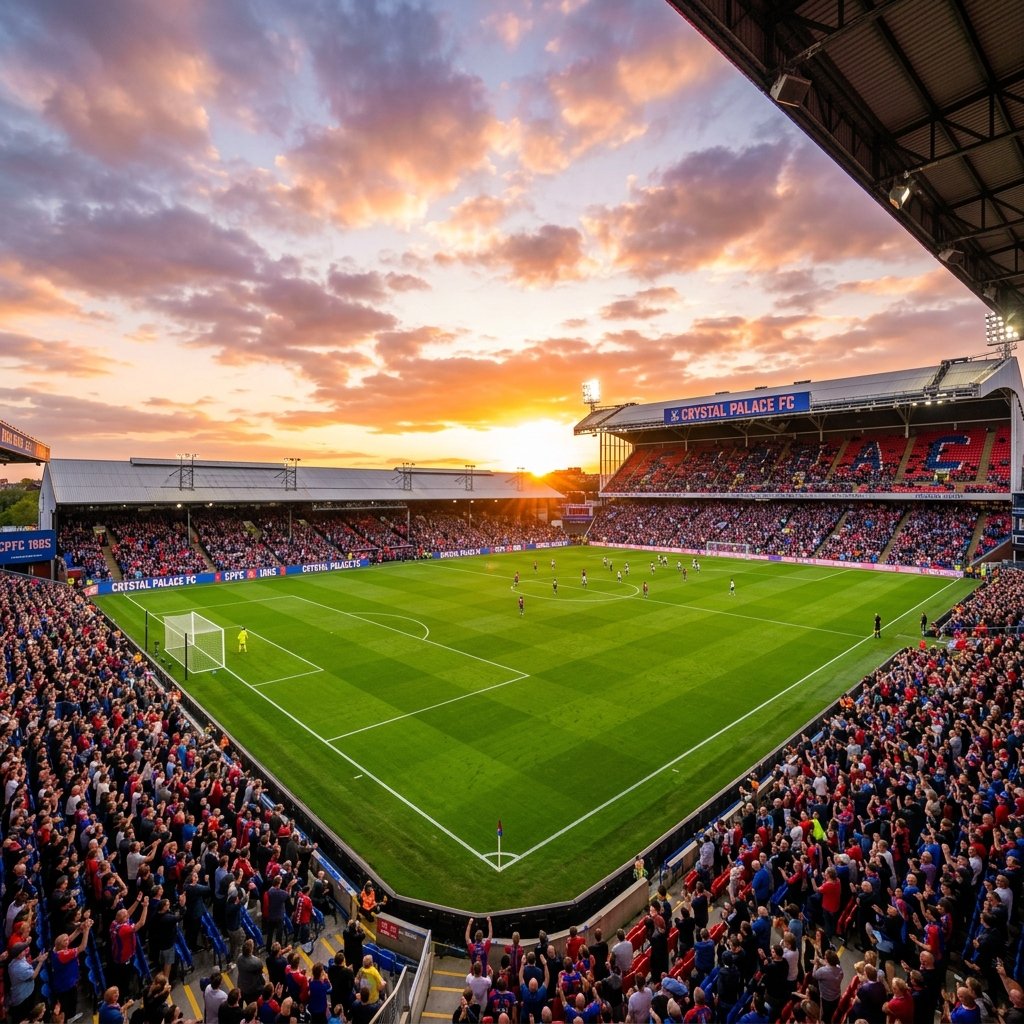
Selhurst Park itself is a crucial part of this legacy. It’s more than just a stadium; it’s a cauldron of passion, famous for its intimidating atmosphere. The Holmesdale Fanatics, with their relentless drums and vocal support, create an environment that can genuinely lift our players and unnerve visiting teams. Many a Premier League giant has left SE25 wondering what hit them, thanks to the sheer volume and loyalty of the Palace faithful.
This unwavering support is a massive factor in maintaining morale, especially when results don’t go our way. Our players understand the weight of history and the expectations of the fans. It’s that connection, that shared belief, that often sees us through the toughest periods. The roar from the stands is a tangible boost, and it’s something Glasner will undoubtedly be looking to harness as we navigate the remainder of the season.
Statistical Breakdown & Player Performance Analysis
Numbers provide an objective lens through which to view our progress, and the statisticians offer some illuminating insights. Under Oliver Glasner, we’ve seen a noticeable uptick in certain key metrics, even amidst injury woes. Our expected goals (xG) per game has risen by approximately 12% compared to the previous managerial tenure, indicating that we are creating higher quality chances, even if the conversion rate hasn’t always followed.
Our possession statistics remain fairly consistent, typically ranging between 40-45%, which aligns with Glasner’s philosophy of direct, transitional play rather than dominance of the ball. However, the intensity of our press, measured by Passes Per Defensive Action (PPDA), has demonstrably increased, showing a proactive shift in how we try to win the ball back. This is a clear indicator that the manager’s training methods are taking hold.
Individually, players like Eberechi Eze and Michael Olise continue to be our creative sparks. Prior to his recent injury, Olise was averaging close to 0.7 goal contributions per 90 minutes, an elite-level statistic. Eze’s dribbling success rate remains one of the highest in the league for attacking midfielders, demonstrating his ability to beat a man and drive into dangerous areas. Their importance to our attacking output cannot be overstated.
In midfield, Adam Wharton has seamlessly transitioned into the Premier League, showing maturity beyond his years. His passing accuracy, particularly in breaking lines, has been a revelation, and he’s quickly become a vital cog in Glasner’s engine room. Even with the injuries, the commitment and tactical discipline from players like Joachim Andersen and Marc Guéhi at the back remain exemplary, providing a solid foundation for the team.
The challenge, however, is consistency. Without key players, others must step up. The likes of Odsonne Edouard and Jordan Ayew will be looked upon to carry more of the attacking burden, both in terms of goals and overall contribution to the team’s pressing game. Their statistics, while not as eye-catching as Eze or Olise’s, will need to improve for us to maintain our momentum.
Looking Ahead: The Road to Glory
The coming weeks will be a true test of our squad’s depth, character, and Oliver Glasner’s tactical acumen. Every match is a battle, and every point is fiercely contested in the Premier League. We have the quality in the squad, the tactical vision from the gaffer, and, without a shadow of a doubt, the best fans in the land roaring us on.
Let’s get behind the lads with every fibre of our being. This is our time to show the Premier League what Crystal Palace is made of. What’s your take on Glasner’s tactics and the impact of these injuries? Drop a comment below and share your thoughts. Don’t forget to check our Squad Page for the latest player profiles and fixtures. Let your voice be heard, Eagles! COYP!